Jaw pain can feel confusing.
It might show up as:
Many people are told to “just avoid chewing” or use a night guard—but that doesn’t always solve the problem.
At Breathe in Motion, we help people in Brookfield and Mequon understand why TMJ pain develops and how to address it so symptoms don’t keep coming back.
What Is TMJ?
TMJ stands for the temporomandibular joint—the joint that connects your jaw to your skull.
This joint:
- Allows you to open and close your mouth
- Helps with chewing and speaking
- Works closely with the muscles of your face, neck, and upper body
When this system isn’t working well, pain and dysfunction can develop.
Common Symptoms of TMJ Dysfunction
TMJ issues can present in a variety of ways, including:
- Jaw pain or tightness
- Clicking, popping, or locking
- Pain with chewing or talking
- Headaches or migraines
- Ear pain or pressure
- Neck and shoulder tension
Symptoms don’t always stay localized to the jaw.
Why TMJ Pain Happens
TMJ pain rarely comes from just one cause.
It’s often a combination of:
1. Muscle Tension and Clenching
Many people:
- Clench their jaw during the day
- Grind their teeth at night
This keeps the jaw muscles in a constant state of tension.
2. Neck and Posture
Your jaw is closely connected to your neck.
Forward head posture and prolonged sitting can:
- Increase strain on the jaw
- Change how the joint moves
3. Stress and Nervous System Load
Stress often shows up physically in the jaw.
Increased stress can lead to:
- Clenching
- Muscle guarding
- Increased sensitivity
4. Movement and Coordination Issues
The jaw needs to move smoothly and evenly.
If coordination is off:
- The joint may click or shift
- Muscles may overwork
Why Treating TMJ Locally Isn’t Enough
Focusing only on the jaw often misses the bigger picture.
TMJ is influenced by:
- Neck mobility
- Posture
- Breathing patterns
- Nervous system tension
This is why symptoms often return without a full-body approach.
How Physical Therapy Helps TMJ Pain
At Breathe in Motion, we treat TMJ as part of a system—not just a joint.
1. Reduce Muscle Tension
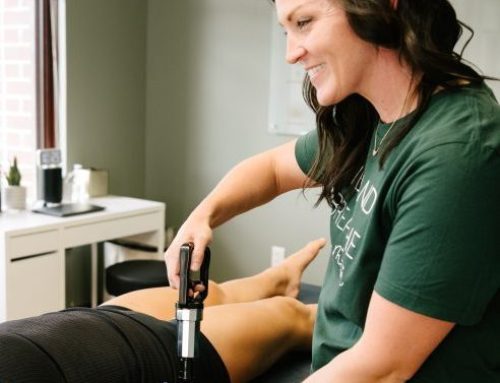
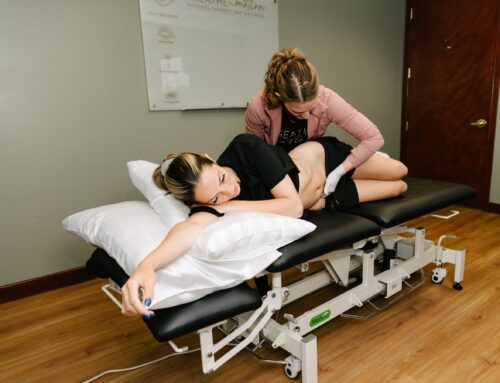
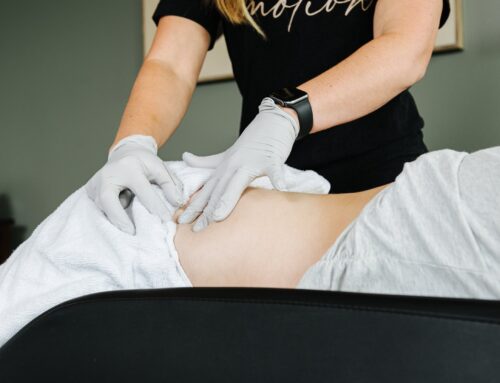
We use hands-on techniques to:
- Decrease jaw and facial tension
- Improve mobility
2. Improve Jaw Movement
We retrain:
- Opening and closing patterns
- Coordination of the joint
3. Address Neck and Posture
We improve:
- Neck mobility
- Upper back strength
- Postural control
4. Support the Nervous System
We guide:
- Breathing strategies
- Relaxation techniques
To reduce tension and improve control.
5. Build Long-Term Resilience
We help you:
- Reduce clenching habits
- Improve movement patterns
- Prevent symptoms from returning
When to Seek Help for TMJ Pain
Consider an evaluation if you have:
- Persistent jaw pain
- Clicking or locking
- Headaches linked to jaw tension
- Pain with chewing or talking
Early treatment can prevent symptoms from becoming chronic.
TMJ Physical Therapy in Brookfield & Mequon
If jaw pain, headaches, or tension are affecting your daily life, this is exactly what we assess during a full evaluation.
Serving clients in Brookfield, Mequon, and the greater Milwaukee area.
Book your TMJ physical therapy evaluation at Breathe in Motion and get a plan built for your symptoms and your goals.