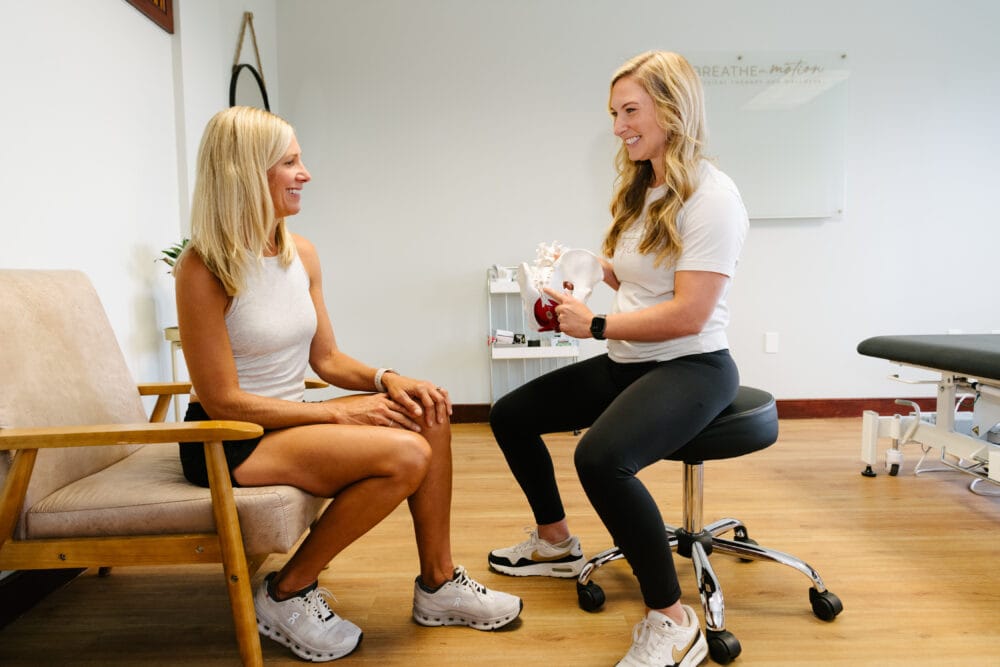
Pelvic organ prolapse can feel alarming—especially if you notice pressure, heaviness, or a bulging sensation.
But it’s more common than most people realize, and in many cases, it’s highly manageable.
At Breathe in Motion, we help active women in Brookfield and Mequon understand what’s happening in their body and build a plan to reduce symptoms, restore support, and return to movement with confidence.
What Is Pelvic Organ Prolapse?
Pelvic organ prolapse occurs when the muscles and connective tissues of the pelvic floor no longer provide enough support for the pelvic organs.
As a result, organs such as the:
- Bladder
- Uterus
- Rectum
…may shift downward, creating a sensation of pressure or bulging in the vaginal canal.
While this can feel concerning, prolapse exists on a spectrum—and many cases can improve with the right approach.
Common Symptoms of Pelvic Organ Prolapse
Symptoms vary depending on severity, but often include:
- A feeling of heaviness, pressure, or fullness in the pelvis
- A bulge or tissue felt at or near the vaginal opening
- Discomfort with prolonged standing, walking, or exercise
- Difficulty with bowel movements or bladder control
- Pain or discomfort during intercourse
- Low back or pelvic discomfort
Symptoms often increase later in the day or after activities that raise abdominal pressure, like lifting or straining.
What Causes Pelvic Organ Prolapse?
Prolapse develops when the pelvic floor and supporting tissues are stretched, weakened, or not coordinating effectively.
Common contributing factors include:
- Pregnancy and vaginal delivery
- Hormonal changes during menopause
- Chronic constipation or straining
- Repetitive heavy lifting or high-pressure exercise
- Chronic coughing
- Prior pelvic surgery
Prolapse is not something you caused—it reflects how your body has adapted over time.
Why Symptoms Show Up During Exercise or Daily Activity
Activities like:
…increase pressure within the abdomen.
If the pelvic floor and core system aren’t managing that pressure efficiently, symptoms like heaviness or bulging can appear.
This is why many women notice prolapse symptoms more during workouts or at the end of the day.
How Pelvic Floor Physical Therapy Helps Prolapse
At Breathe in Motion, treatment focuses on improving how your body supports and manages load—not just strengthening muscles in isolation.
1. Improve Pelvic Floor Strength and Coordination
We assess how your pelvic floor:
- Contracts
- Relaxes
- Responds under load
Many individuals have muscles that are overactive or poorly coordinated—not just weak.
2. Retrain Pressure Management and Breathing
We help your diaphragm, core, and pelvic floor work together to:
- Reduce downward pressure
- Support pelvic organs during movement
3. Build Core and Hip Strength
Stronger hips and trunk improve how force moves through your body—reducing strain on the pelvic floor.
4. Modify Movement and Exercise
We guide adjustments to:
- Lifting mechanics
- Exercise selection
- Daily movement patterns
So you can stay active without worsening symptoms.
5. Return to Activity with Confidence
You don’t have to avoid movement.
We help you return to:
- Strength training
- Running
- Daily activities
With better support and control.
Can Pelvic Organ Prolapse Improve Without Surgery?
In many cases, yes.
Pelvic floor physical therapy can:
- Reduce pressure and symptoms
- Improve support and coordination
- Help you return to exercise and daily life
Surgery is not the only option, and physical therapy is often recommended as a first step.
When to See a Pelvic Floor Physical Therapist
It’s time to get evaluated if you notice:
- Pelvic pressure or heaviness
- A bulging sensation
- Changes in bladder or bowel function
- Symptoms that worsen with activity
Early support can make a significant difference—but improvement is possible at any stage.
The Goal: Feel Supported in Your Body Again
Pelvic organ prolapse doesn’t mean you need to stop being active.
It means your body needs a better strategy for managing pressure and load.
With the right plan, you can move, exercise, and live without constant concern.
Ready to Address Pelvic Organ Prolapse?
If you’re experiencing pressure, heaviness, or changes in your body, this is exactly what we assess during a full evaluation.
Serving active women and athletes in Brookfield, Mequon, and the greater Milwaukee area.
Book your pelvic floor physical therapy session at Breathe in Motion and get a plan built for your body, your symptoms, and your goals.