Managing Neck Pain: How Movement and Manual Therapy Work Together
Neck pain is a common and often complex issue treated in physical therapy. Many factors can contribute to discomfort, including workspace setup, prolonged phone use, posture, upper back strength, muscle tightness, and limited mobility through the mid back.
Because neck pain rarely exists in isolation, effective treatment looks beyond the neck itself.
How Posture and Muscle Imbalances Contribute to Neck Pain
Tightness in the chest, back of the neck, and mid back plays a major role in ongoing neck pain. When the chest muscles become tight, they pull the shoulders forward. This creates a rounded upper back posture, which then shifts the head forward.
Over time, this forward head posture increases strain on the neck muscles and joints. At the same time, weakness in the mid-back muscles makes it harder to maintain proper alignment throughout the day.
Addressing these patterns is key to long-term relief.
The Role of Physical Therapy in Treating Neck Pain
Physical therapy for managing neck pain focuses on restoring movement, improving strength, and correcting postural habits that contribute to symptoms. Your physical therapist will guide you through a progressive exercise program designed to improve posture, strengthen the upper back and core, and reduce strain on the neck.
Just as important, treatment often includes manual therapy to address tissue and joint restrictions.
How Manual Therapy Helps Neck Pain
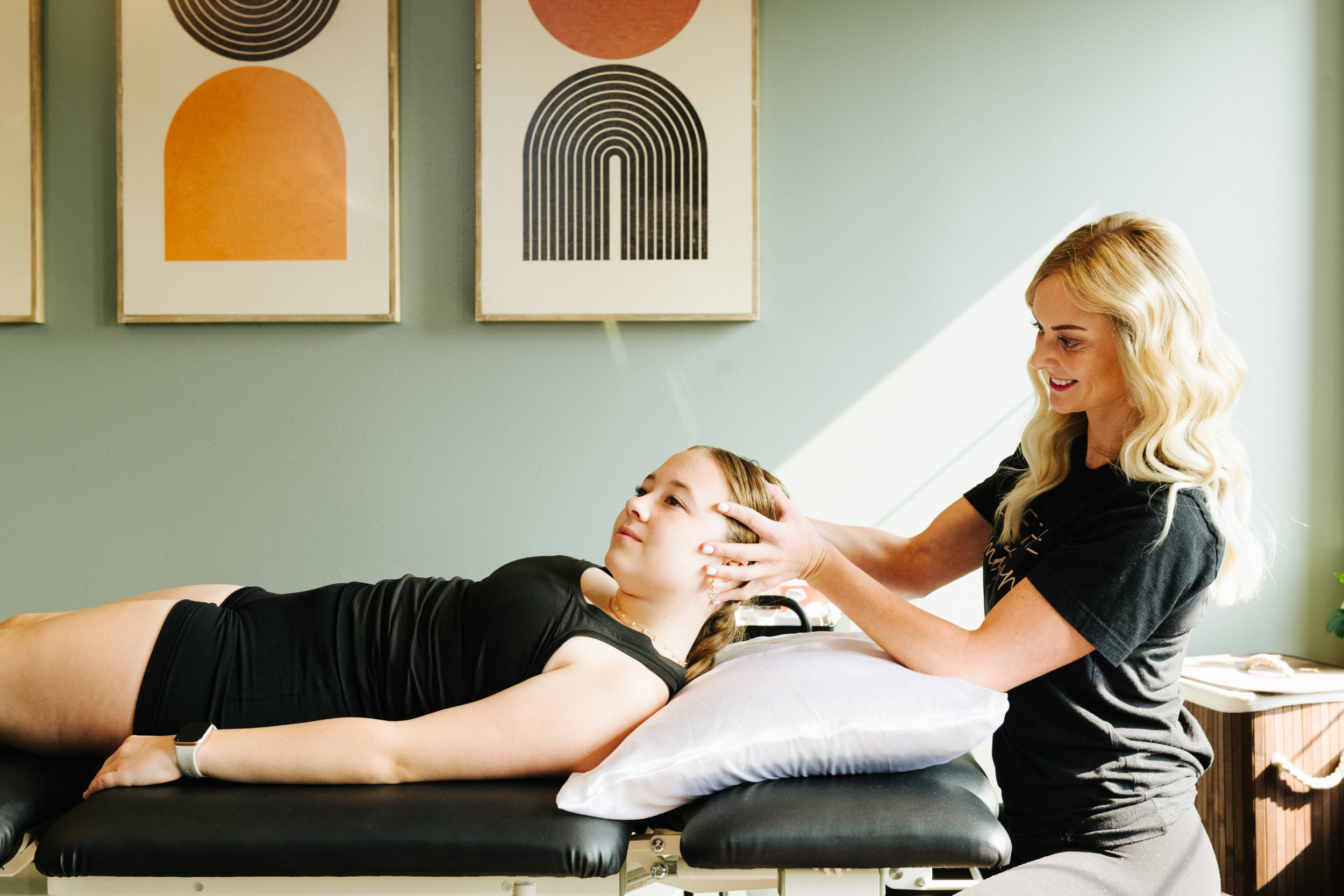
Manual therapy is a hands-on treatment approach used to reduce pain and improve mobility. For neck pain, manual therapy may include soft tissue techniques, joint mobilizations, dry needling and myofascial release to address tight or restricted areas.
These techniques help:
Reduce muscle tension in the neck and shoulders
Improve mobility in the cervical and thoracic spine
Restore normal movement patterns
Improve the effectiveness of strengthening exercises
By improving tissue mobility and joint motion, manual therapy allows your body to move more efficiently and respond better to exercise-based treatment.
Exercises to Support Neck Pain Relief
While hands-on treatment is important, movement is essential for lasting improvement. To get started, try incorporating these exercises into your routine:
Snow angels on a foam roller
Band pull-aparts with palms facing up
Thread-the-needle mobility exercise
These movements help improve upper back mobility, strengthen postural muscles, and reduce strain on the neck.
You Don’t Have to Manage Neck Pain Alone
Neck pain can feel frustrating, especially when it lingers or keeps coming back. The good news is that there are many effective ways to address it through physical therapy and manual therapy.
If you’re struggling to manage neck pain on your own, give us a call at our Brookfield or Mequon locations. We’d be happy to help you move better, feel stronger, and work toward your goals.