Are Squats Bad for Your Knees?
As physical therapists, we often hear the question: “Are squats bad for my knees?”
The short answer is no. In fact, squats are good for you when performed correctly.
Squats aren’t just a gym exercise. They’re a foundational human movement. When you avoid squats altogether, you may lose strength, mobility, and confidence over time. When you train them well, they support daily movement and long-term joint health.
Here’s why we love squats.
Strength
First, squats build strength in the major lower-body muscle groups. This includes the glutes, quadriceps, hamstrings, and core.
These muscles work together to keep you upright and stable. A strong core helps protect your spine. Meanwhile, strong glutes and quads reduce excess stress on the knees.
Function
Next, squats directly translate to everyday life. Each time you stand up from a chair, sit down on the toilet, or pick something up from the floor, you’re performing a squat.
Practicing squats helps your body move more efficiently during daily activities. As a result, tasks feel easier and more controlled.
Joint Health
Squats also support joint health. They promote mobility and help lubricate the joints. In addition, they distribute forces more evenly through the knees and hips.
Over time, this can support bone strength and help reduce the risk of conditions like osteoporosis.
Body Awareness and Injury Prevention
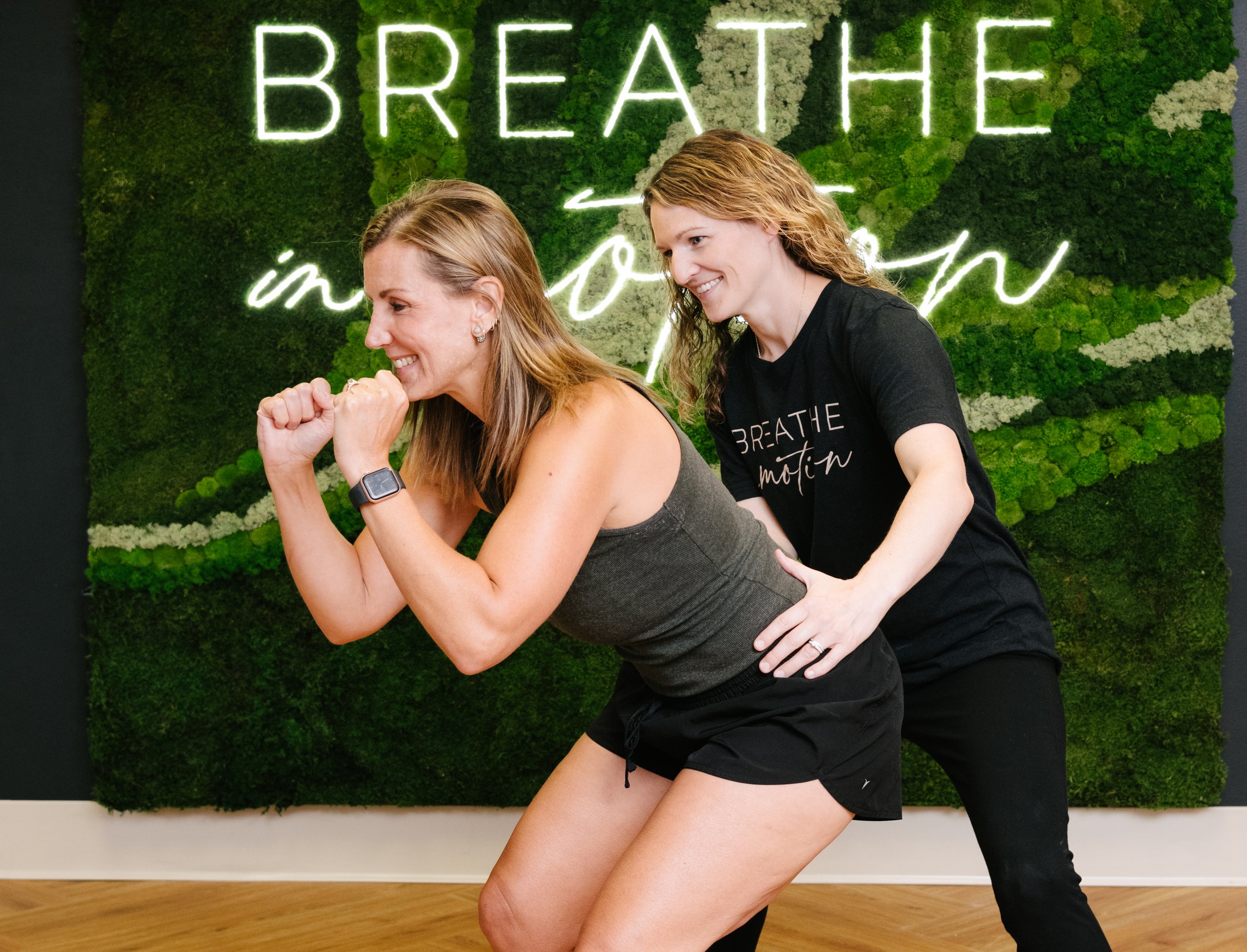
Finally, squats improve body awareness. When we teach proper squat mechanics, we focus on balance, coordination, and motor control.
As a result, squats can reduce injury risk, improve athletic performance, and lower the risk of falls.
How to Squat Safely
Technique matters. When squatting:
Keep your chest tall and spine neutral
Push your hips back as if sitting into a chair
Keep your knees tracking in line with your toes
Start with a range of motion that feels safe and controlled
Most importantly, squats are adaptable. They can be modified to meet your body, your goals, and your current abilities.
Joint Health:
Squats increase mobility, improves joint lubrication, and assists with balancing forces in your
knees. Squats also help with strengthening bones and preventing osteoporosis.
Body Awareness:
When we teach you how to squat we are also focusing on motor control, balance, and
coordination. Squats can decrease your risk of injury, improve your athletic performance, and
decrease your risk of falls.
When performing squats it is important to perform them correctly. Keep your chest and spine neutral, push your hips back like you’re sitting down into a chair, keep your knees in line with your toes, and start with a range of motion that feels safe to you. Squats are adaptable and can be tailored to you!