With running season in full swing across Wisconsin, many athletes start to notice small inefficiencies, nagging aches, or plateaus in performance.
A running gait analysis helps connect those dots.
It shows how your body moves with every step—and where small changes can make a big difference in both performance and injury risk.
What Is a Running Gait Analysis?
A running gait analysis is a detailed assessment performed by a Doctor of Physical Therapy to evaluate your running mechanics.
At Breathe in Motion, this includes:
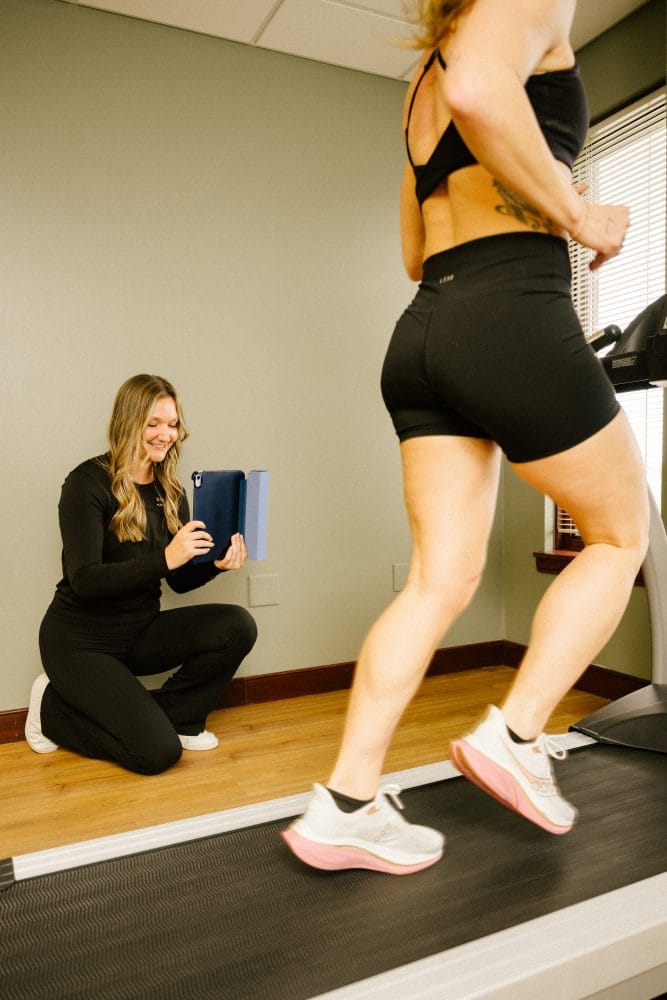
Running on a treadmill
Video analysis from multiple angles
Adjustments to speed and incline based on your goals
This allows us to break down how your body loads, absorbs force, and moves through each phase of your stride.
Who Should Get a Running Analysis?
Not just injured runners.
A running analysis is valuable for:
Runners dealing with recurring aches or injuries
Athletes increasing mileage or training intensity
Runners looking to improve speed or efficiency
Healthy runners who want to stay ahead of injury
Waiting until something hurts often means the issue has been building for a while. A gait analysis helps catch problems earlier.
How a Running Gait Analysis Helps Prevent Injury
Running injuries rarely come from one moment—they build over time through repeated movement patterns.
A gait analysis helps identify:
Strength or mobility imbalances
Movement patterns that increase joint stress
Poor force absorption during landing
Stride mechanics that overload certain tissues
When these patterns improve, your body distributes load more efficiently—reducing strain on areas like the knee, hip, and foot.
How a Running Analysis Can Improve Speed and Efficiency
Performance and injury prevention go hand in hand.
Small inefficiencies in your stride can:
Waste energy
Increase fatigue
Limit power output
By refining mechanics, you can:
Improve running economy
Generate force more effectively
Maintain speed with less effort
For many runners, these adjustments translate into better pacing, improved endurance, and stronger finishes.
What Happens After Your Gait Analysis
The analysis is just the starting point.
From there, we build a plan that may include:
Strength training to support better mechanics
Mobility work to improve movement options
Drills to retrain your running pattern
Guidance on mileage, pacing, and progression
This bridges the gap between what we see and how you actually run outside the clinic.
What Most Runners Miss
Many runners focus on:
Mileage
Pace
Training plans
But overlook how they move.
Your mechanics influence how your body handles every step. When those patterns improve, everything else becomes more efficient.
Ready to Run Stronger and More Efficiently?
If you’re dealing with recurring aches, building mileage, or looking to improve performance, this is exactly what we assess during a running evaluation.
Serving runners in Brookfield and Mequon who want to train smarter, move better, and stay consistent.
Schedule your running gait analysis at Breathe in Motion and get a plan built for your stride, your goals, and your season.