Shoulder Pain in Brookfield & Mequon Gymnasts
From bars to beam to floor, the shoulders take on a huge amount of load in gymnastics. Every swing, handstand, and tumbling pass requires strength, control, and stability through a joint that is built for mobility.
When the body is not managing that load well, the shoulder often becomes the breaking point.
At Breathe in Motion, we help gymnasts in Brookfield and Mequon understand why shoulder pain keeps coming back and how to fix it so they can train and compete without constant setbacks.
Why Gymnasts Are Prone to Shoulder Pain
Gymnastics demands:
Repetitive overhead loading
Weight bearing through the arms
High force through end ranges of motion
The shoulder has to:
Stabilize under load
Move through large ranges
Transfer force efficiently
When strength and control do not match these demands, pain and injury can develop.
Common Causes of Shoulder Pain in Gymnasts
1. Repetitive Overhead Loading
Skills on bars, handstands, and tumbling place repeated stress through the shoulder.
Without proper support from the:
Core
Scapular muscles
Upper back
The shoulder joint takes on more load than it should.
2. Poor Shoulder and Scapular Control
The shoulder relies heavily on the scapula for stability.
When there is:
Poor control of the shoulder blade
Lack of coordination during movement
It can lead to irritation and overload.
3. Limited Thoracic Mobility
The upper back plays a key role in overhead movement.
If mobility is limited:
The shoulder has to compensate
Stress increases at the joint
4. Weakness in Supporting Muscles
The shoulder does not work in isolation.
Weakness in the:
Rotator cuff
Upper back
Core
Can reduce stability and increase injury risk.
5. Training Volume and Repetition
High frequency of skills without adequate recovery can lead to:
Overuse
Irritation
Breakdown over time
6. Returning Too Quickly After Injury
Many gymnasts return to skills before:
Strength is fully restored
Control is rebuilt
This increases the likelihood of recurring pain.
Common Shoulder Injuries in Gymnasts
We frequently treat:
Rotator cuff irritation
Shoulder impingement
Labral irritation
Instability
Growth related shoulder injuries in younger athletes
These often develop gradually from repeated stress rather than a single incident.
Signs Shoulder Pain Shouldn’t Be Ignored
You should get evaluated if you notice:
Pain with overhead movements or skills
Discomfort during handstands or bars
Clicking, catching, or instability
Loss of strength or control
Addressing symptoms early helps prevent longer downtime.
Why Rest Alone Doesn’t Fix Shoulder Pain
Rest may reduce symptoms temporarily.
But if strength, control, and movement patterns are not addressed:
Pain often returns
Instability continues
Performance is limited
How Physical Therapy Helps Gymnasts
At Breathe in Motion, we take a full body, performance based approach for gymnasts in Brookfield, Mequon, and the greater Milwaukee area.
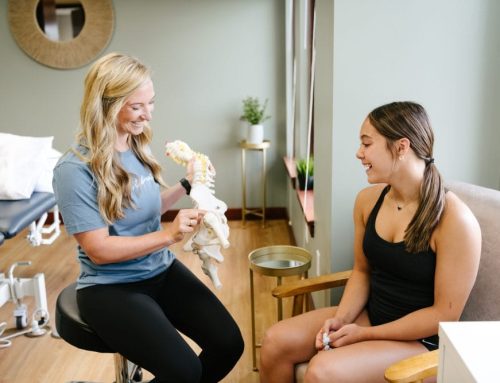
1. Identify the Root Cause
We assess:
Shoulder strength and stability
Scapular control
Thoracic mobility
Core strength and coordination
2. Restore Strength and Stability
We build:
Rotator cuff strength
Scapular stability
Upper back support
3. Improve Mobility
We address:
Thoracic spine restrictions
Shoulder mobility limitations
So movement becomes more efficient.
4. Retrain Movement Patterns
We help gymnasts:
Control overhead positions
Reduce compensation
Improve alignment
5. Guide Return to Sport
We progress:
Load
Skill intensity
Volume
So gymnasts return safely and confidently.
The Goal: Strong, Stable, and Resilient Shoulders
Shoulder pain does not mean you have to stop gymnastics.
It means your body needs better support.
With the right approach, gymnasts can:
Reduce pain
Improve performance
Prevent future injuries
Gymnastics Shoulder Pain Treatment in Brookfield and Mequon
If shoulder pain is limiting your training, this is exactly what we assess during a full evaluation.
We work with gymnasts across Brookfield, Mequon, and the greater Milwaukee area to build plans that match your body and your goals.
Book your gymnastics physical therapy evaluation at Breathe in Motion and get back to training with confidence.