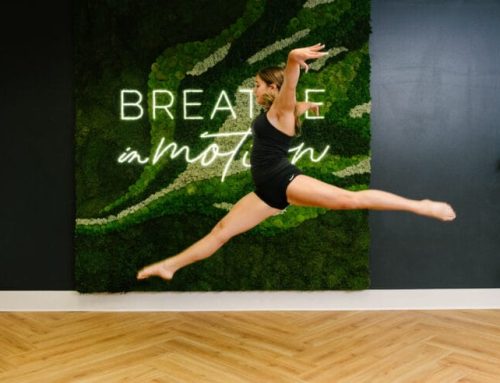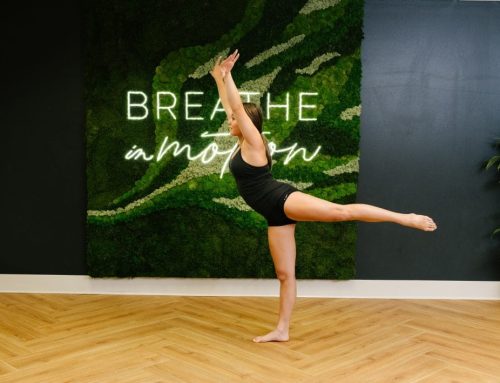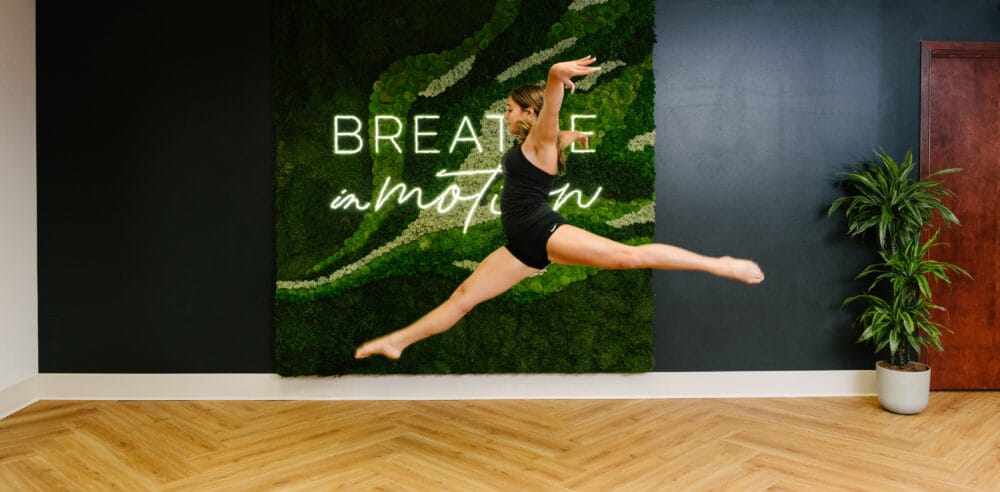
Straight legs are a defining part of strong technique in both dance and gymnastics.
Clean lines in leaps, kicks, extensions, and holds all rely on the ability to fully straighten the knee. But while flexibility often gets the focus, straight legs depend just as much on strength and control.
At Breathe in Motion, we work with dancers and gymnasts in Brookfield and Mequon who feel like they’re constantly fighting for straight legs—despite stretching consistently.
Why Straight Legs Are Harder Than They Should Be
If your knees won’t fully straighten, it’s usually not just a flexibility issue.
Straight-leg control requires:
- Hamstring flexibility
- Quadriceps strength
- Core and pelvic stability
- Coordination through movement
When one piece is missing, the body compensates—and that’s when bent knees show up.
Hamstring Tightness: Not Always a Stretching Problem
Hamstring tightness is often blamed for bent knees.
But in many dancers and gymnasts, the hamstrings feel “tight” because they’re overworking—not because they’re actually short.
This often happens when:
- Core stability is limited
- The pelvis isn’t well controlled
- The hamstrings are compensating for other areas
In these cases:
stretching alone won’t fix the issue
and can sometimes make irritation worse
Quad Weakness: The Missing Link for Straight Legs
Your quadriceps are responsible for straightening your knee.
If they lack strength or endurance, it becomes difficult to:
- Hold straight-leg positions
- Maintain extension during jumps or kicks
- Control end-range movement
This often shows up as:
- Slight knee bend during skills
- Shaking or loss of control
- Difficulty locking out fully
Building quad strength is essential for achieving consistent, clean lines.
Why Strength + Control Matter More Than Flexibility Alone
True straight legs come from balance—not just mobility.
You need:
- Hamstrings that can lengthen and relax
- Quads that can actively straighten the knee
- A core and pelvis that provide stability
When these systems work together, knee extension becomes controlled—not forced.
How to Improve Straight-Leg Control
Training should focus on:
1. Active Knee Extension Strength
Strengthening the quads in straight-leg positions helps you own the end range—not just reach it.
2. Core and Pelvic Stability
Better control at the trunk reduces the need for hamstring compensation.
3. Controlled Movement Through Range
Instead of passive stretching, focus on:
- Strength through full range
- Slow, controlled movement
- Stability in extended positions
Why This Matters for Injury Prevention
Bent knees and poor control don’t just affect technique—they increase stress on the body.
Improving straight-leg mechanics can:
- Reduce strain on the knees and hips
- Improve landing mechanics
- Decrease risk of overuse injuries
How Dance and Gymnastics Physical Therapy Helps
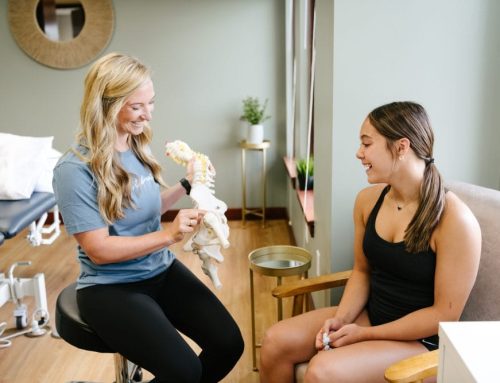
At Breathe in Motion, we take a full-body approach to performance.
We assess:
- Strength and control through range
- Movement patterns during skills
- Core and pelvic stability
- Muscle coordination
Then build a plan that improves both technique and resilience.
Physical Therapy for Dancers and Gymnasts in Brookfield & Mequon
If straight legs feel out of reach despite stretching and training, there’s usually a missing piece.
Serving dancers and gymnasts in Brookfield, Mequon, and the greater Milwaukee area.
Book your physical therapy evaluation at Breathe in Motion and get a plan built for your body, your training, and your performance goals.