Hip Pain in Brookfield & Mequon Gymnasts
Gymnasts are often known for their flexibility.
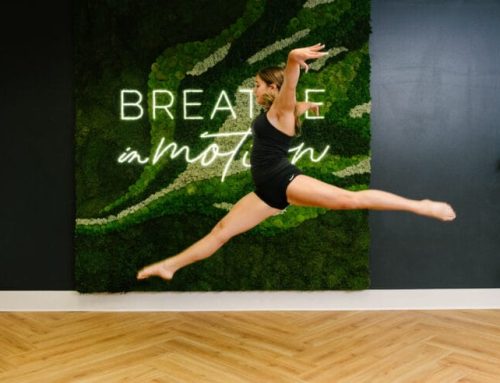
Splits, leaps, bridges, and extreme ranges of motion are part of the sport.
But flexibility alone does not protect against injury.
In fact, many gymnasts who experience hip pain already have plenty of mobility. The issue is often a lack of strength and control at those extreme ranges.
At Breathe in Motion, we help gymnasts in Brookfield, Mequon, and the greater Milwaukee area understand why hip pain develops and how to build the strength needed to support the demands of gymnastics.
Why Hip Pain Is Common in Gymnasts
Gymnastics requires:
Extreme flexibility
Powerful jumping and tumbling
Repeated impact
Strong body control at end ranges of motion
The hip must move through large ranges while also producing and absorbing force.
When strength does not match mobility, the hip becomes vulnerable to overload.
The Hypermobility Advantage and Challenge
Many gymnasts naturally have some degree of hypermobility.
Hypermobility means a joint can move beyond what is considered a typical range of motion.
This can be beneficial in gymnastics because it allows athletes to achieve positions that are difficult for others.
However, mobility alone is not enough.
A gymnast must also be able to control those positions.
Without strength and stability, the body often relies on passive structures such as:
Ligaments
Joint capsules
Connective tissue
Over time, this can contribute to pain and irritation.
The Missing Piece: End Range Strength
One of the most common things we see in gymnasts with hip pain is a lack of strength at end ranges of motion.
Many athletes can achieve:
Oversplits
High leg holds
Deep backbends
But struggle to actively control those positions.
This creates a gap between flexibility and stability.
The larger that gap becomes, the more stress is placed on the hip.
Why Hip Extension Strength Matters
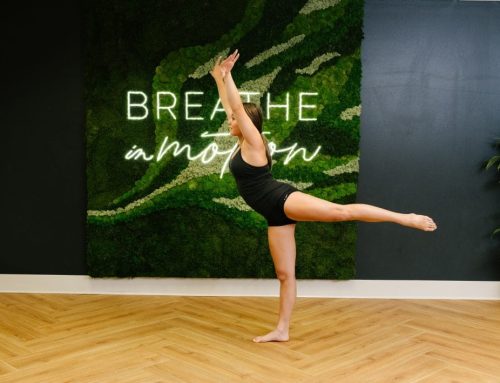
Hip extension is the motion of moving the leg behind the body.
Gymnasts rely on hip extension during:
Leaps
Jumps
Back walkovers
Back handsprings
Running approaches
Many gymnasts have excellent passive hip extension flexibility.
But they often lack the strength to actively control and produce force in that position.
When this happens:
The low back compensates
The front of the hip becomes irritated
Force transfer becomes less efficient
Over time, pain can develop.
Common Signs of End Range Weakness
You may notice:
Hip pain during leaps or extensions
Pinching in the front of the hip
Low back tightness after practice
Difficulty controlling leg lifts
Feeling flexible but not strong
These are often signs that strength is not matching mobility.
Why Stretching More Usually Doesn’t Help
When hip pain develops, many gymnasts immediately stretch more.
But if the athlete already has plenty of mobility, additional stretching may:
Increase instability
Worsen compensation patterns
Place more stress on the hip
The goal is not always more range.
The goal is owning the range you already have.
Other Contributors to Hip Pain in Gymnasts
Hip pain is rarely caused by one thing alone.
We also commonly assess:
Core strength and control
Single leg stability
Landing mechanics
Hip rotation control
Training volume and recovery
Because the hip does not work in isolation.
How Physical Therapy Helps Gymnasts with Hip Pain
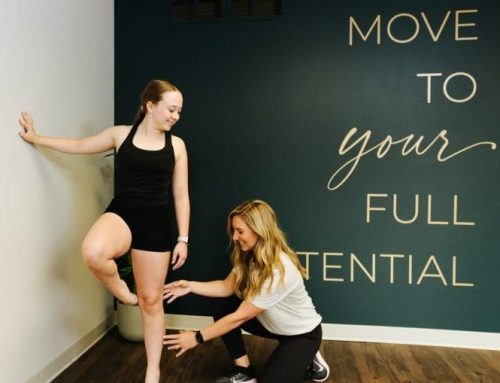
At Breathe in Motion, we take a performance based approach for gymnasts in Brookfield, Mequon, and the greater Milwaukee area.
1. Identify the Root Cause
We assess:
Hip mobility
End range strength
Core stability
Movement control
Gymnastics specific demands
2. Build Strength at End Ranges
We help gymnasts develop:
Active flexibility
Hip extension strength
Control through full ranges of motion
This helps bridge the gap between flexibility and performance.
3. Improve Stability and Force Transfer
We focus on:
Core strength
Single leg stability
Hip stability
So the body can move efficiently during skills.
4. Retrain Movement Patterns
We help gymnasts:
Reduce compensations
Improve technique efficiency
Decrease unnecessary stress on the hip
5. Return to Training with Confidence
The goal is not just reducing pain.
The goal is helping gymnasts perform at a higher level.
The Goal: Strong and Mobile Hips
The best gymnasts are not simply flexible.
They are strong throughout the ranges they use every day.
When mobility and strength work together, athletes can:
Reduce pain
Improve performance
Decrease injury risk
Train more consistently
Gymnastics Hip Pain Treatment in Brookfield and Mequon
If hip pain is limiting your gymnastics training, this is exactly what we assess during a full evaluation.
We work with gymnasts throughout Brookfield, Mequon, Milwaukee, and the surrounding communities to identify the root cause of pain and build a plan that supports long term performance.
Book your gymnastics physical therapy evaluation at Breathe in Motion and learn how to turn flexibility into strength.