Dance Physical Therapy in Brookfield & Mequon
If you’ve rolled your ankle once, you know how frustrating it can be.
If you’ve rolled it multiple times, you may have started to wonder if it’s just something you’ll always deal with.
We hear it all the time from dancers throughout Brookfield, Mequon, Milwaukee, and the surrounding communities:
“I’ve always had weak ankles.”
The truth is, that’s usually not the case.
At Breathe in Motion, we rarely find that recurrent ankle sprains are simply caused by weak ankles. More often, they’re a sign that something else higher up or lower down the chain isn’t doing its job.
Why Dancers Are More Prone to Ankle Sprains
Dance demands incredible precision.
Whether you’re landing from a leap, balancing en pointe, turning, or transitioning quickly between movements, your ankles absorb an enormous amount of force.
The problem isn’t that dancers move this way.
The problem is when the rest of the body isn’t helping absorb those forces.
When that happens, the ankle becomes the body part that pays the price.
It’s Usually Bigger Than the Ankle
One of the biggest mistakes we see is focusing only on the ankle after an injury.
Yes, restoring ankle mobility and strength is important.
But if that’s all you address, there’s a good chance the injury will happen again.
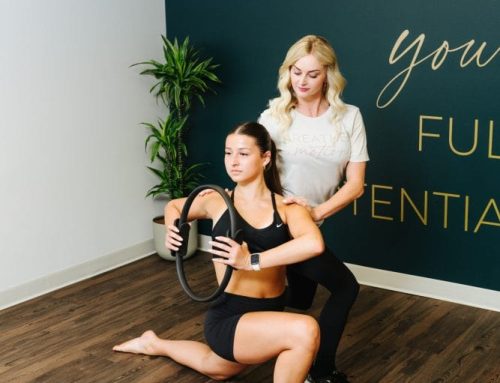
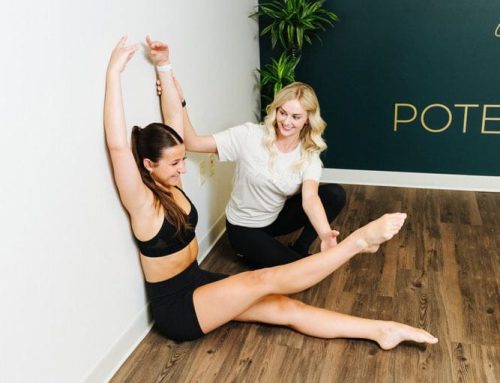
When a dancer comes into Breathe in Motion after multiple ankle sprains, we’re looking at much more than the ankle itself.
We’re asking questions like:
How well do the hips control single leg movements?
Can the foot create a stable base during landings?
Is the dancer able to balance without relying on compensation?
Do they have enough calf strength for repeated jumps and releves?
How do they absorb force when they land?
These answers tell us much more than an X ray ever could.
Your Hips Play a Bigger Role Than You Think
Many dancers are surprised when we start working on their hips during ankle rehabilitation.
But your hips are your body’s primary stabilizers.
If your glutes aren’t controlling your pelvis and femur, your knee and ankle often have to compensate.
Over time, that compensation can make an ankle more vulnerable during turns, jumps, and landings.
Building stronger hips doesn’t just improve performance.
It helps protect your ankles every time your foot meets the floor.
Your Feet Need Strength Too
Flexibility is important in dance, but flexibility without strength creates instability.
The small muscles inside your feet work constantly to maintain balance and control.
If those muscles fatigue quickly or aren’t strong enough, your ankle has a much harder time responding when your body is challenged.
That’s why rehabilitation often includes strengthening the foot itself, not just the larger muscles of the leg.
Landing Matters More Than You Realize
Many ankle sprains don’t happen because of one bad step.
They happen because of thousands of repetitions with mechanics that slowly increase stress over time.
We watch how dancers:
Jump
Land
Balance
Turn
Transition between movements
Sometimes one small change in landing mechanics can significantly reduce the stress placed on the ankle throughout class and rehearsals.
Our Goal Isn’t Just to Get You Back to Dance
Of course we want your ankle pain to improve.
But our bigger goal is helping you dance confidently without constantly worrying about your next sprain.
That means building a body that’s prepared for the demands of dance.
When we address strength, balance, mobility, movement quality, and technique together, dancers don’t just recover.
They often perform better than they did before the injury.
Don’t Let One Ankle Sprain Become the Next One
If you’ve rolled your ankle more than once, it’s worth asking why it keeps happening.
At Breathe in Motion, we help dancers throughout Brookfield, Mequon, Milwaukee, Wauwatosa, Cedarburg, and the surrounding communities identify the root cause of recurring ankle sprains and create a plan that supports both recovery and performance.
Because the goal isn’t just getting you back on stage.
It’s helping you dance with strength, confidence, and resilience for years to come.
If you’re ready to stop worrying about your ankles every time you dance, schedule an evaluation with our team. We’ll help you uncover what’s really causing your ankle injuries and build a plan that keeps you moving.