Hip Pain in Dancers and Why Stretching Isn’t Always the Answer
If you’re a dancer, feeling “tight” probably isn’t anything new.
You stretch before class, work on your flexibility outside of the studio, and regularly move your hips through ranges of motion that most people never ask their bodies to achieve.
So when the front of your hip starts feeling tight, pinchy, or uncomfortable during développés, battements, extensions, or other leg movements, the natural response is usually to stretch it more.
But what happens when stretching doesn’t fix it?
At Breathe in Motion, we work with dancers throughout Brookfield, Mequon, Milwaukee, and the surrounding communities who come to us frustrated because they can’t seem to get rid of that nagging sensation in the front of their hip. Often, they don’t actually need more flexibility.
They need more strength and control within the flexibility they already have.
Why Hip Pain Is So Common in Dancers
Dance asks the hips to do an incredible amount of work.
Every class involves repeatedly lifting the leg, rotating through the hip, balancing on one leg, jumping, landing, and controlling large ranges of motion. As dancers progress, they’re expected to create more height, more turnout, and more control without sacrificing technique.
When the muscles surrounding the hip, pelvis, and core aren’t sharing those demands efficiently, the muscles at the front of the hip may start doing more work than they should.
That’s when dancers often begin describing their hip as “tight.”
They may stretch before class and feel temporary relief, only to notice the same sensation returning as soon as they start lifting their leg again.
The problem isn’t always that the hip flexor is too short.
Sometimes it’s simply working too hard.
When Your Hip Flexors Are Doing Everyone Else’s Job
Your hip flexors are supposed to help lift your leg, so naturally they’re going to work during dance.
The problem starts when they’re asked to create the movement while also compensating for strength or control that’s missing somewhere else.
For example, if your deep core isn’t providing enough stability as you lift your leg, your hip flexors may have to work harder to control your pelvis. If your glutes aren’t strong enough to support your standing leg, your body may compensate elsewhere to keep you balanced. If you have incredible passive flexibility but lack the strength to actively control your end range, you may rely on other muscles to force your leg into positions your body can’t efficiently maintain.
Over hundreds of repetitions, that extra work can start to feel like tightness, pinching, fatigue, or pain in the front of the hip.
This is why repeatedly stretching the area may provide temporary relief without actually changing the reason the discomfort keeps coming back.
Dancers Need Strength at Their End Range
Dancers are unique because simply having hip mobility isn’t enough.
You need to be able to control that mobility.
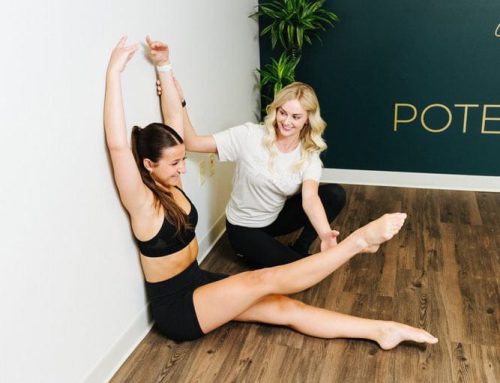
There’s a big difference between how high your leg can go when someone else pushes it there and how high you can lift and hold it on your own with good technique.
That difference is where strength becomes incredibly important.
If you can passively move into a large range but don’t have the hip, glute, and core strength to actively control that position, your body will find another way to accomplish the movement. Sometimes that means gripping through the front of the hip, changing the position of the pelvis, or compensating through the lower back.
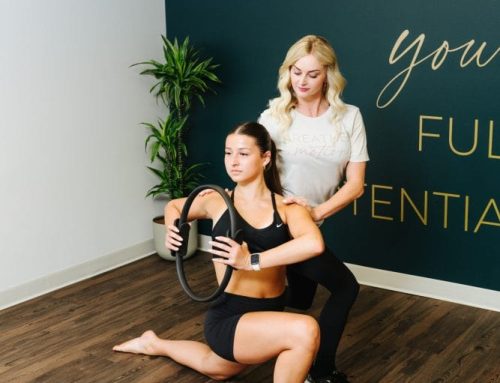
Instead of continuing to chase more flexibility, building strength through the ranges you already have can help make those movements feel more controlled and powerful.
For dancers, strength doesn’t take away from flexibility.
It helps you use it.
Your Standing Leg Matters Too
When a dancer comes to us with right hip pain, it would be easy to spend the entire evaluation looking at the right hip.
But dance doesn’t happen one body part at a time.
During a développé, extension, or battement, the standing leg has an enormous job. Your foot, ankle, hip, glutes, and core all have to create a stable foundation while the other leg moves freely.
If that foundation isn’t strong enough, your working hip may have to compensate to complete the movement.
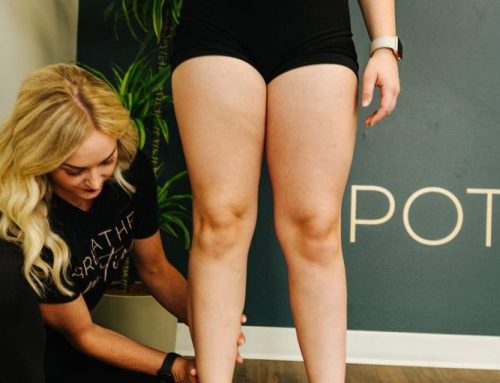
This is why our dance physical therapy evaluations look beyond the painful area. We want to see how you balance, how your pelvis moves, how your core responds, how much active mobility you have, and how your body controls the exact movements that are causing symptoms.
Treating the painful hip matters, but understanding why it became painful matters even more.
Should You Stop Stretching Your Hip?
Not necessarily.
Mobility is an important part of dance, and stretching isn’t inherently bad.
The bigger question is whether stretching is actually addressing what your body needs.
If you’ve been stretching the same “tight” hip for weeks or months and the sensation continues to return, doing more of the same may not be the solution.
Your body may be asking for better core control, stronger hips and glutes, improved pelvic stability, or more strength at the end ranges required by your choreography.
That’s where an individualized assessment can make a big difference.
The Goal Isn’t Just to Dance Without Pain
At Breathe in Motion, we don’t want to simply calm down your hip pain and send you back to class.
We want to help you understand why it started.
For one dancer, that may mean improving deep core control so the hip flexors don’t have to work as hard. For another, it may mean building more strength through the glutes and standing leg. Someone else may need to improve active hip mobility so they can control their extensions without compensating through their pelvis or back.
Once we understand what’s driving the problem, we can build a plan around the demands of dance rather than treating you like any other person with hip pain.
Because the goal isn’t simply to get your hip feeling better.
It’s to help you return to class with more strength, control, and confidence than you had before.
Dance Physical Therapy in Brookfield & Mequon
If the front of your hip constantly feels tight, pinchy, or painful during dance, don’t assume you just need to stretch more.
At Breathe in Motion, we help dancers throughout Brookfield, Mequon, Milwaukee, and the surrounding communities identify the root cause of hip pain and build the strength, mobility, and control they need for the demands of their sport.
Whether symptoms show up during développés, battements, extensions, jumps, or simply after a long week of rehearsals, we’ll look at your whole body and your dance specific movement to understand what’s really happening.
You already work hard on your flexibility.
It may be time to make sure you have the strength to control it.