Understanding Why Pelvic Floor Symptoms Are About More Than Just Your Pelvic Floor
When you think about pelvic floor health, you probably think about Kegels, core weakness, or the muscles responsible for bladder control. But what if the reason you’re experiencing pelvic floor symptoms has more to do with how the rest of your body is functioning?
Maybe you leak a little when you jump, feel pelvic pressure after a workout, or notice that your core doesn’t feel as strong as it used to. You’ve tried Kegels, focused on strengthening your abs, or even avoided certain exercises, but the symptoms keep coming back.
Here’s what many women don’t realize: your pelvic floor doesn’t work in isolation.
At Breathe in Motion, we work with women throughout Brookfield, Mequon, Milwaukee, and the surrounding communities who are experiencing pelvic floor symptoms that may be influenced by much more than the pelvic floor itself. Your hips, core, breathing patterns, and the way your body manages pressure all play a role in how your pelvic floor functions during everyday activities and exercise.
Understanding those connections can be an important part of getting back to doing what you love without constantly thinking about your pelvic floor.
Your Pelvic Floor Is Part of a Bigger System
Your pelvic floor is a group of muscles that supports your pelvic organs and helps with bladder and bowel control, sexual function, and managing pressure throughout your abdomen.
But those muscles aren’t meant to do all of that work alone.
Your pelvic floor works alongside your diaphragm, abdominal muscles, and the muscles surrounding your hips and pelvis to create stability and manage the forces your body experiences throughout the day.
When you inhale, your diaphragm moves downward and your pelvic floor typically lengthens slightly to accommodate changes in pressure. As you exhale, your diaphragm rises and your pelvic floor naturally recoils. This coordinated movement helps your body manage pressure while breathing, lifting, running, and exercising.
Your abdominal muscles also contribute to this system by providing trunk support and helping control movement, while your hips and glutes help stabilize your pelvis during activities like walking, squatting, jumping, and running.
When these systems aren’t working together efficiently, your pelvic floor may have a harder time responding to the demands you’re placing on it.
That doesn’t necessarily mean your pelvic floor is weak. It may mean your body needs better coordination, strength, mobility, or pressure management.
Why Hip Strength and Core Control Matter for Pelvic Floor Symptoms
If you’re experiencing urinary leakage, pelvic pressure, or discomfort during exercise, your first instinct probably isn’t to think about your hips.
But your hips and pelvis are closely connected, both anatomically and functionally.
The muscles surrounding your hips help control how your pelvis moves and how your body absorbs force. When you’re running, jumping, or lifting weights, your glutes and other hip muscles contribute to the strength and stability needed to handle those movements.
If your hips aren’t adequately prepared for the demands of your activity, your body may compensate in other ways. This can change how forces are distributed through your trunk and pelvis and may contribute to symptoms in some women.
Your core plays an equally important role.
And when we say core, we’re not just talking about your six-pack muscles.
Your deeper abdominal muscles work with your diaphragm, pelvic floor, and other trunk muscles to provide support as you move. Having a strong core isn’t simply about being able to hold a plank or perform crunches. It’s about having the strength and coordination to manage the demands of whatever activity you’re doing.
For example, you might be able to perform traditional core exercises without difficulty but still experience leaking when jumping rope or pelvic pressure during a heavy squat.
That’s because your body needs to coordinate these muscles differently depending on the task.
The goal isn’t just to strengthen individual muscles. It’s to teach them to work together when you actually need them.
Pelvic Floor Physical Therapy Should Look at the Whole Body
If you’re dealing with leaking, pelvic heaviness, or discomfort during exercise, the answer isn’t always to stop doing the activities you love.
And it isn’t always to do more Kegels.
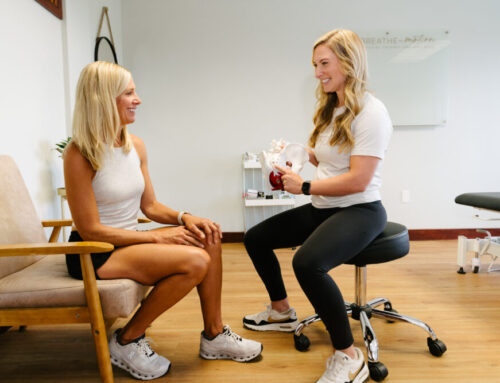
At Breathe in Motion, our approach to pelvic floor physical therapy goes beyond assessing pelvic floor strength alone. We want to understand how your entire body is contributing to your symptoms and what needs to change to help you feel more confident during movement.
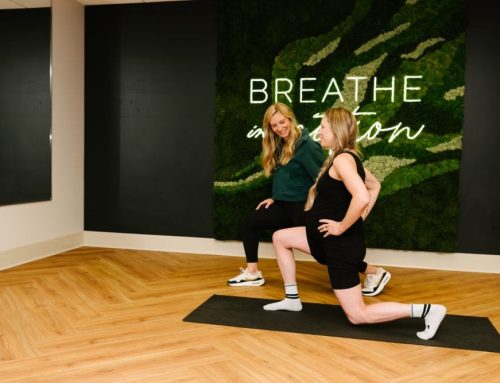
Depending on your symptoms and goals, that may include evaluating pelvic floor muscle strength and coordination, hip strength, core control, breathing mechanics, mobility, and how your body responds to activities like squatting, lifting, running, or jumping.
From there, we create an individualized plan that addresses the factors contributing to your symptoms while building the strength and capacity you need for your daily life and workouts.
For one woman, that might mean improving pelvic floor relaxation and coordination. For another, it might involve progressing hip and core strength, adjusting training demands, or practicing strategies for managing pressure during higher-impact activities.
There’s no one-size-fits-all solution because no two women move, train, or experience symptoms exactly the same way.
Pelvic Floor Physical Therapy in Brookfield & Mequon
Whether you’re postpartum, navigating changes during menopause, or simply noticing that your body responds differently to exercise than it used to, pelvic floor symptoms don’t have to become something you just accept.
At Breathe in Motion, we provide individualized, one-on-one pelvic floor physical therapy for women throughout Brookfield, Mequon, Milwaukee, and the surrounding communities.
Our goal isn’t just to help you stop leaking or reduce pelvic pressure temporarily. We want to understand what’s contributing to your symptoms, build strength and coordination throughout your body, and help you return to the activities you love with confidence.
Because your pelvic floor is part of a bigger system, and your treatment should reflect that.
If you’re experiencing pelvic floor symptoms during workouts or everyday activities, schedule an initial evaluation with Breathe in Motion to learn how a whole-body approach to pelvic floor physical therapy can help you get back to moving confidently.