What Dancers and Parents Should Know Before Starting Pointe
Getting your first pair of pointe shoes is a milestone many young dancers dream about for years.
It represents progress, hard work, and an exciting next step in ballet. So when classmates begin going en pointe or a dancer reaches the age when she expected to start, it’s understandable that one question becomes very important:
“Am I ready for pointe?”
The answer shouldn’t be based on age alone.
At Breathe in Motion, we work with dancers throughout Brookfield, Mequon, Milwaukee, and the surrounding communities, and one of the most important things we want dancers and parents to understand is that pointe readiness is about whether the dancer’s body has developed the strength, mobility, control, and technique necessary to safely handle the demands of pointe work.
Starting pointe isn’t simply about whether your feet can get into the position.
It’s about whether your entire body can control it.
Pointe Readiness Is More Than Reaching a Certain Age
Age can certainly be one consideration when determining pointe readiness, particularly because young dancers are still growing and developing, but there isn’t one birthday that suddenly makes every dancer physically prepared for pointe.
Two dancers of the same age can have completely different levels of strength, training experience, technique, mobility, and body control.
One may have spent years developing excellent single leg stability and calf strength, while another may still struggle to maintain alignment during a relevé. A dancer may have beautiful passive flexibility but lack the strength to actively control those ranges, while another may be incredibly strong but need additional mobility to achieve the positions required for pointe.
That’s why readiness should be based on the individual dancer rather than simply the number on her birth certificate.
Pointe Places New Demands on the Entire Body
It may look like pointe is primarily about the feet and ankles, but the demands extend much farther up the body.
When a dancer rises onto pointe, her feet and ankles need enough mobility to achieve the position while also having the strength to control it. Her calves need the endurance to repeatedly rise and lower with control, while her knees, hips, core, and pelvis need to maintain alignment above a very small base of support.
If one area isn’t contributing enough, another area may compensate.
A dancer who lacks ankle mobility may try to force the position through her feet. Someone without adequate hip or core control may struggle to maintain alignment as she rises. A dancer who doesn’t have enough calf endurance may begin with beautiful technique but lose control as she becomes fatigued.
Being able to get onto pointe once is very different from having the strength and control to repeat it throughout an entire class.
Strength Matters Just as Much as Flexibility
Dancers spend an incredible amount of time working on flexibility, but pointe is one of the clearest examples of why flexibility without strength isn’t enough.
Your foot may be able to achieve a beautiful pointed position when you’re sitting on the floor, but pointe work asks you to control your entire body weight through that position.
That requires strength.
Foot and ankle strength help create a stable base, while calf strength allows you to rise and lower with control. Hip and glute strength help maintain lower body alignment, and your core provides the stability necessary to keep the rest of your body organized above your feet.
For dancers who are naturally very flexible or hypermobile, this becomes even more important because having access to a large range of motion doesn’t necessarily mean the body knows how to control it.
Before adding more range, we want to know that the dancer has strength within the range she already has.
What Do We Look at During a Pointe Readiness Assessment?
A pointe readiness assessment should look beyond whether a dancer can point her toes or perform a certain number of relevés.
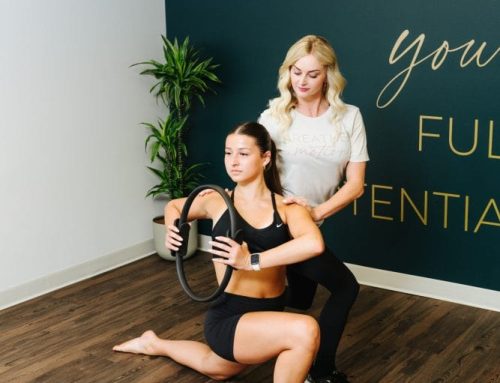
At Breathe in Motion, we want to understand how the dancer moves as a whole.
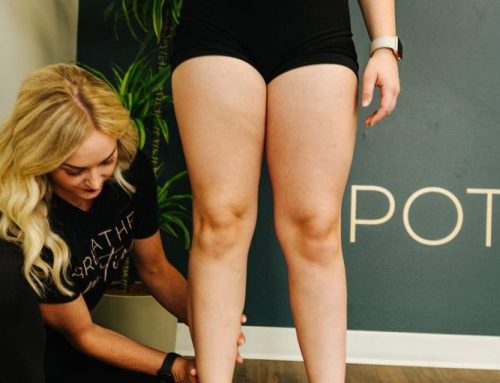
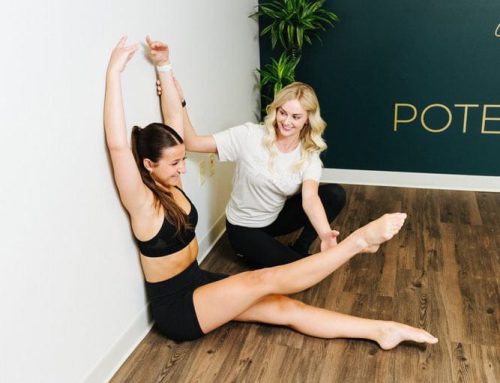
We look at foot and ankle mobility, calf and foot strength, balance, single leg control, hip strength, core stability, and how well the dancer maintains alignment during movements that resemble the demands of ballet.
We also pay attention to what happens when the dancer becomes tired.
A dancer may demonstrate excellent control during the first few repetitions but begin rolling through the ankle, losing pelvic control, or compensating elsewhere as fatigue sets in. Because pointe work requires repeated movements throughout class and rehearsal, endurance matters just as much as performing one repetition correctly.
The goal isn’t to “pass” or “fail” a dancer.
It’s to identify what her body is already doing well and where she may need additional preparation before progressing.
What If a Dancer Isn’t Ready Yet?
Hearing “not yet” can be disappointing, especially when friends or teammates have already started pointe.
But not being ready today doesn’t mean a dancer won’t be ready soon.
In fact, identifying specific areas that need improvement gives the dancer something much more valuable than simply waiting. Instead of guessing, she can work on a targeted plan designed to improve the strength, mobility, balance, or control she needs.
Maybe she needs more calf endurance.
Maybe her feet need additional strength.
Maybe she needs better single leg stability or more control through her hips and core.
Once we know what’s limiting her, we can build those areas intentionally and reassess as she progresses.
The goal isn’t to hold dancers back.
It’s to give them the foundation they need to move forward with confidence.
Starting Pointe Should Be the Beginning, Not the Finish Line
Getting pointe shoes is exciting, but being cleared to begin pointe doesn’t mean the work is finished.
As dancers progress, the demands continue to increase. More time is spent en pointe, movements become more complex, and the body needs to tolerate increasing repetition and fatigue.
Continuing to build strength alongside dance training can help support those increasing demands.
This is especially important during adolescence, when growth spurts can temporarily change balance, coordination, flexibility, and strength. A dancer’s body can change significantly over a relatively short period of time, which means the strength and control that felt easy several months ago may suddenly require more work.
Supporting dancers through those changes can help them continue progressing without feeling like their changing body is working against them.
Pointe Readiness Is About Building Confidence
Ultimately, pointe readiness isn’t about checking boxes just so a dancer can get her first pair of shoes.
It’s about making sure she has the physical foundation to take that next step with confidence.
When dancers know their bodies are strong enough to support them, they can spend less time worrying about whether they’re ready and more time developing the artistry and technique that make dance so rewarding.
At Breathe in Motion, our goal isn’t simply to help dancers reach pointe.
We want to help them build bodies that can continue dancing for years to come.
Pointe Readiness and Dance Physical Therapy in Brookfield & Mequon
If your dancer is approaching pointe or has been told she may be ready soon, a pointe readiness assessment can help you better understand whether her body is prepared for the next step.
At Breathe in Motion, we work with dancers throughout Brookfield, Mequon, Milwaukee, and the surrounding communities to assess strength, mobility, balance, movement control, and the physical demands of dance.
If we identify areas that need more work, we’ll create an individualized plan designed around your dancer rather than simply telling her to wait.
Because starting pointe shouldn’t be about reaching a certain age or keeping up with everyone else.
It should be about having the strength, control, and confidence to take that next step safely.